
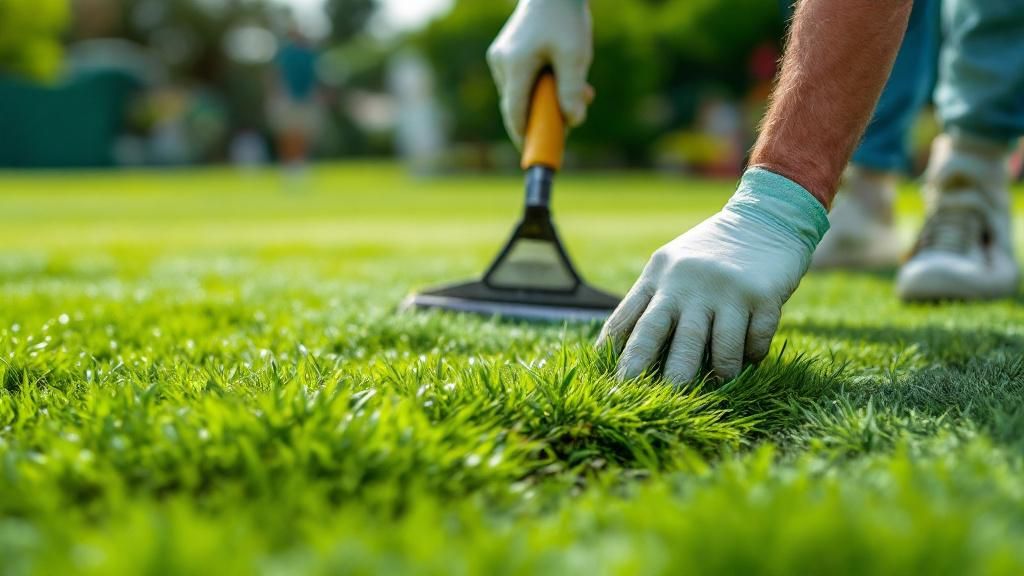
For over a century, Wimbledon’s pristine grass courts have enchanted tennis devotees worldwide, yet few understand the painstaking craftsmanship needed to preserve them. In an rare conversation, the All England Club’s chief grounds manager unveils the carefully protected secrets behind these verdant masterpieces—from specialised grass varieties and exact cutting techniques to soil composition and yearly upkeep. Discover how decades of horticultural expertise and advanced systems work together to produce the world’s finest tennis surface, ensuring every match is contested on perfection.
The Science Behind Wimbledon’s Immaculate Courts
Wimbledon’s grass courts represent a remarkable achievement of horticultural science and precise planning. The All England Club employs a sophisticated blend of traditional knowledge and modern technology to preserve surfaces that are simultaneously robust enough to resist intense competitive play and aesthetically flawless. The head groundskeeper manages a team of specialists who understand that grass court care extends far beyond basic cutting, encompassing soil chemistry, drainage systems, and precise moisture regulation throughout the year.
The selection of turf varieties creates the foundation of Wimbledon’s success. The courts employ a meticulously developed mixture of perennial ryegrass and other complementary varieties, picked intentionally for their durability and court behaviour. These grasses are chosen through rigorous testing and analysis, ensuring they possess the perfect balance of hardness, uniformity, and appearance standards. The turf maintenance crew carries out continuous testing to evaluate emerging varieties, upholding Wimbledon’s standing at the forefront of playing surface development and distinction.
Soil composition serves a crucial yet often underestimated role in court performance. Beneath the visible grass surface lies a precisely engineered foundation comprising multiple layers of different soil types, sand, and organic materials. This stratified design enables effective drainage whilst maintaining adequate moisture retention during play. The groundskeepers regularly analyse soil samples to track nutrient levels, pH balance, and microbial activity, conducting refinements as needed to preserve the ideal growing environment for the grass above.
Precision grass cutting constitutes another cornerstone of Wimbledon’s upkeep programme. The courts are cut to exacting specifications—typically kept at around 8 millimetres during the tournament. Dedicated machinery, such as cylinder mowers with numerous cutting edges, ensures a consistent finish that promotes reliable playing surface consistency and court performance. The cutting timetable adapts based on grass development and climatic factors, with the groundskeeping team making decisions informed by detailed observations and historical data gathered throughout decades of experience.
Water management constitutes a delicate balancing act throughout the tournament period. The groundskeepers utilise sophisticated irrigation technology that deliver precise amounts of water to ensure optimal grass health without producing waterlogged conditions. During Wimbledon fortnight, soil moisture receive constant monitoring and adjustment, as the interplay between intense play, foot traffic, and summer heat generates unique challenges. The team employs weather forecasting data to anticipate requirements and prevent both water deficit and excessive dampness.
Nutrition and fertilisation programmes are created to sustain the grass through varying seasons. The groundskeeping team applies precisely balanced fertilisers at strategic intervals, encouraging strong development during spring and early summer whilst strengthening the grass before and after the tournament. Organic and inorganic amendments work synergistically to improve soil quality and nutrient availability. This scientific approach ensures the grass maintains adequate resources to recover rapidly from the demanding nature of championship play.
Continuous Grass Management Strategies
Wimbledon’s grounds maintenance crew operates on a carefully structured annual calendar that begins in autumn. Following the Championships, the courts receive extensive restoration, including scarifying to eliminate dead plant material and aeration to improve soil structure. During winter, attention turns to maintaining drainage systems and targeted overseeding using ryegrass varieties picked for their resilience and appearance. Spring preparation increases in intensity ahead of the tournament, with fertiliser applications designed to encourage strong development whilst maintaining optimal playing conditions throughout the summer period.
The shift through spring requires particular attention to irrigation management and pest management. The groundskeeping team assesses soil conditions regularly, adjusting watering routines based on rainfall and temperature fluctuations. Specialist fungicides and insecticides are applied preventatively rather than reactively, ensuring the grass remains disease-free and resilient. By May’s conclusion, when the tournament begin, the courts have been groomed to perfection through sustained careful maintenance, resulting in the signature verdant playing surface that characterises Wimbledon’s standing.
Springtime and Summer Preparation
As temperatures increase in spring, the groundskeeping team increases their activity to prepare the courts for tournament play. Careful cutting commences at particular lengths, generally kept at thirteen millimetres during the major event. Surface rolling are conducted strategically to harden the playing area and guarantee even ball bounce across all courts. Nitrogen-based fertilisers are distributed in precise amounts to encourage thick, vigorous grass without promoting overgrowth that could affect court quality or necessitate additional maintenance.
Summer care during the Championships represents the apex of the groundskeeper’s expertise. Daily inspections detect surface degradation, notably around baseline and net areas where athlete activity concentrates. Immediate remedial measures, encompassing strategic irrigation and gentle rolling, resolve any surface irregularities. The team sustains close monitoring against climatic pressures, with backup strategies for heavy rain or unexpected heat. This unwavering commitment guarantees uniform court standards throughout the two-week event, allowing competitors to focus entirely on their competitive displays.
Sophisticated Apparatus and Accurate Instruments
Wimbledon’s grounds maintenance crew employs an remarkable collection of state-of-the-art machinery purpose-built for lawn court upkeep. These bespoke implements, many purpose-built for the All England Club’s demanding specifications, represent considerable commitment in grass management systems. The calibrated systems ranges from state-of-the-art sprinkler networks to laser-guided mowing machines, each calibrated to maintain the courts’ renowned playing characteristics. This technological arsenal, combined with time-honoured techniques, ensures consistent surface quality during and after the championship.
The selection and utilisation of equipment demonstrates years of gathered expertise and ongoing development within the turf management industry. Each machine goes through comprehensive testing and fine-tuning before the tournament season commences, with routine maintenance programmes conducted throughout the year. The head groundskeeper and their team recognise that equipment performance directly impacts court conditions, athlete safety, and the tournament’s worldwide prestige. Commitment to superior machinery reflects Wimbledon’s unwavering commitment to excellence and upholding its status as the sport’s premier destination.
- Precision cylinder mowers cut grass to precise millimetre tolerances.
- Laser-guided line marking systems guarantee perfectly straight court boundaries.
- Soil moisture sensors track water content continuously throughout.
- Professional aeration machinery promotes healthy root development each year.
- Custom watering solutions deliver precise water quantities daily.
The combination of modern technology with conventional groundskeeping methods exemplifies Wimbledon’s distinctive approach to court maintenance. Digital monitoring systems monitor grass health metrics in real-time fashion, allowing the team to act quickly to external conditions or emerging issues. Advanced weather prediction systems enable forward-looking changes to irrigation routines and maintenance routines, anticipating conditions rather than merely reacting to them. This innovative strategy demonstrates how Wimbledon maintains leadership of sports surface management.
Beyond the tournament itself, the groundskeeping team utilises advanced equipment for year-round maintenance and restoration work. Specialised machinery enables overseeding programmes, thatch removal, and soil amendment processes essential for court longevity. Training programmes guarantee all staff members operate equipment safely and effectively, maintaining the most rigorous standards. The progressive advancement of groundskeeping technology, combined with Wimbledon’s willingness to embrace innovation, guarantees that future generations will enjoy equally immaculate playing surfaces.
